

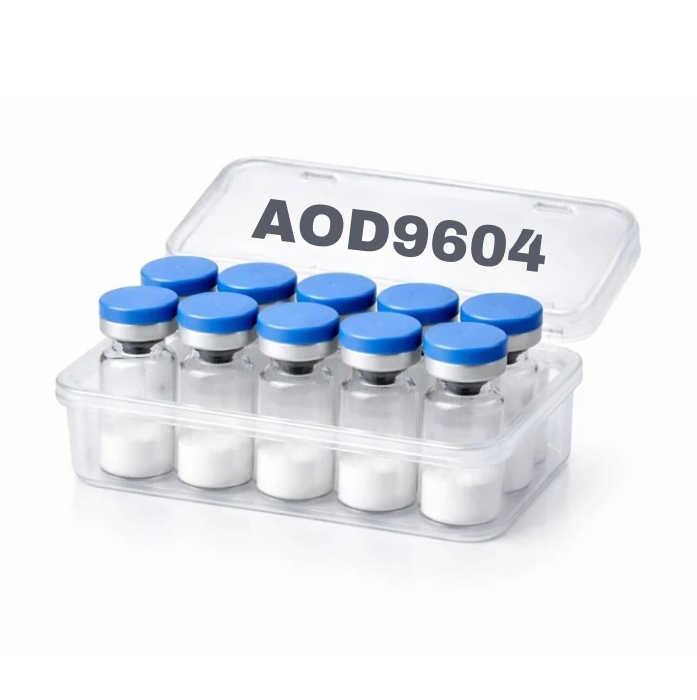
AOD9604 5mg
$90.00
YOUR ORDER COMES WITH;
-
10 VIALS x 2mg of AOD9604 Research Peptide
-
FREE: Bacteriostatic Water (30ml), Sterile Syringes (1ml, 29G), and Alcohol Swabs
-
DOSING SCHEDULE: Comprehensive laboratory administration protocol for research models
-
USAGE INSTRUCTIONS: Detailed reconstitution guide, storage parameters, and handling procedures
-
A COPY OF LAB RESULTS: Certificate of Analysis (CoA) confirming purity, sequence, and sterility
AOD9604 is a modified fragment of human growth hormone (hGH 177-191) designed for research into fat metabolism and lipolysis without the growth-promoting effects of full-length hGH. This complete research kit includes all necessary components for standardized experimental studies in metabolic science.
Modified Growth Hormone Fragment for Lipid Metabolism Research
AOD9604 (Anti-Obesity Drug 9604) is a synthetic, modified peptide fragment corresponding to amino acids 177-191 of the human growth hormone (hGH) beta chain, with a tyrosine residue added to the N-terminus for stability (sequence: YLRIVQCRSVEGSCGF). This 16-amino acid peptide was specifically engineered to retain the lipolytic (fat-breaking) and metabolic properties associated with the C-terminus of hGH while eliminating the growth-promoting, insulin resistance, and other potentially undesirable effects of the full hormone. In research settings, AOD9604 serves as a precise tool for investigating the mechanisms of stimulated fat metabolism, enhanced lipid oxidation, and the specific pathways through which growth hormone influences adipose tissue. Supplied as a lyophilized powder, this research compound is intended strictly for controlled, non-human laboratory studies exploring targeted approaches to modulating lipid metabolism and energy homeostasis.
Complete Research Kit Contents & Verification
Each research order provides a complete experimental package designed for metabolic research:
-
Primary Research Compound: 10 sterile glass vials containing 2mg of lyophilized AOD9604 peptide powder per vial.
-
Reconstitution Solution: 30ml vial of sterile Bacteriostatic Water (0.9% Benzyl Alcohol), essential for creating stable peptide solutions for experimental use.
-
Laboratory Administration Tools: Pack of sterile 1ml insulin syringes (29G x 1/2″) for precise measurement and transfer in accordance with research protocols.
-
Sterilization Supplies: Individually wrapped alcohol prep swabs to maintain aseptic technique during vial handling and reconstitution.
-
Research Protocol Documentation:
-
Dosing Schedule: Standardized administration protocol for research models focusing on lipid metabolism, fat reduction studies, and metabolic rate investigation.
-
Usage Instructions: Comprehensive guide covering reconstitution math, storage conditions (-20°C recommended), handling safety, and experimental best practices for in-vivo or in-vitro metabolic research.
-
-
Quality Verification: Certificate of Analysis (CoA) provided with each batch, detailing:
-
Purity Analysis (>98% by HPLC)
-
Amino Acid Sequence Verification (Mass Spectrometry)
-
Molecular Weight: 1815.1 Da Confirmed
-
Correct Modification Verification (N-terminal tyrosine)
-
Sterility Testing Results
-
Endotoxin Levels (<10 EU/mg)
-
Residual Solvent Analysis
-
Net Peptide Content
-
Research Applications & Scientific Utility
In a laboratory setting, AOD9604 enables targeted investigation into the lipolytic actions of growth hormone. Primary research applications include studying the stimulation of hormone-sensitive lipase (HSL) and subsequent triglyceride breakdown in adipocytes, researching increased fat oxidation and energy expenditure in metabolic models, investigating insulin sensitivity effects compared to full-length hGH, exploring potential anti-obesity mechanisms in diet-induced obesity animal models, and examining receptor binding profiles to understand its selectivity for metabolic vs. growth pathways. Researchers utilize this specific fragment to isolate and study the C-terminal region’s role in metabolism, providing insights into designing future selective metabolic modulators without systemic growth effects.
Laboratory Handling & Safety Protocol
-
Storage: Store unopened lyophilized peptide vials at -20°C or below for long-term stability. Reconstituted solutions should be aliquoted and stored at -20°C and used within a defined experimental timeframe to ensure peptide integrity.
-
Reconstitution: Must be performed under sterile laboratory conditions using the provided bacteriostatic water. The peptide is readily soluble. Swirl gently to dissolve.
-
Laboratory Safety: Standard personal protective equipment (PPE) including lab coat, nitrile gloves, and safety glasses must be worn. Follow institutional biosafety level (BSL) guidelines for handling biochemical reagents.
-
Documentation: The provided CoA should be retained for research records. Given its origin as a modified hGH fragment, precise documentation of the sequence and modification is crucial for scientific rigor.
⚠️ Critical Compliance & Intended Use Disclaimer:
THIS PRODUCT IS SOLD FOR RESEARCH USE ONLY (RUO). NOT FOR HUMAN OR VETERINARY DIAGNOSTIC OR THERAPEUTIC USE.
-
Intended Use: AOD9604 is supplied as a biochemical reagent for laboratory research purposes only. It is intended for use by qualified researchers in controlled settings studying lipid metabolism and adipose tissue biology. The included “dosing schedule” refers to standardized research model administration protocols only.
-
Not for Human Consumption: Under no circumstances is this product intended for administration to humans or animals. It is not a weight loss drug, dietary supplement, or performance enhancer. The provided syringes and supplies are for laboratory measurement and transfer only.
-
Regulatory Status: This product has not been evaluated or approved by the FDA or any other global health authority for the treatment of obesity or any other condition. It remains an investigational research compound.
-
Relation to hGH: Although derived from hGH sequence, this product is a distinct fragment and is NOT human growth hormone. It does not possess the full spectrum of hGH activity and is not a substitute for hGH in research requiring the full hormone.
-
Researcher Responsibility: It is the sole responsibility of the purchasing individual/institution to ensure compliance with all regulations regarding the possession, use, and disposal of research peptides and to use this product only for legitimate, non-human research.
Be the first to review “AOD9604 5mg”
Related products
Peptides
Peptides
Peptides
Peptides
Peptides
Peptides
Peptides
Peptides
Reviews
There are no reviews yet.